
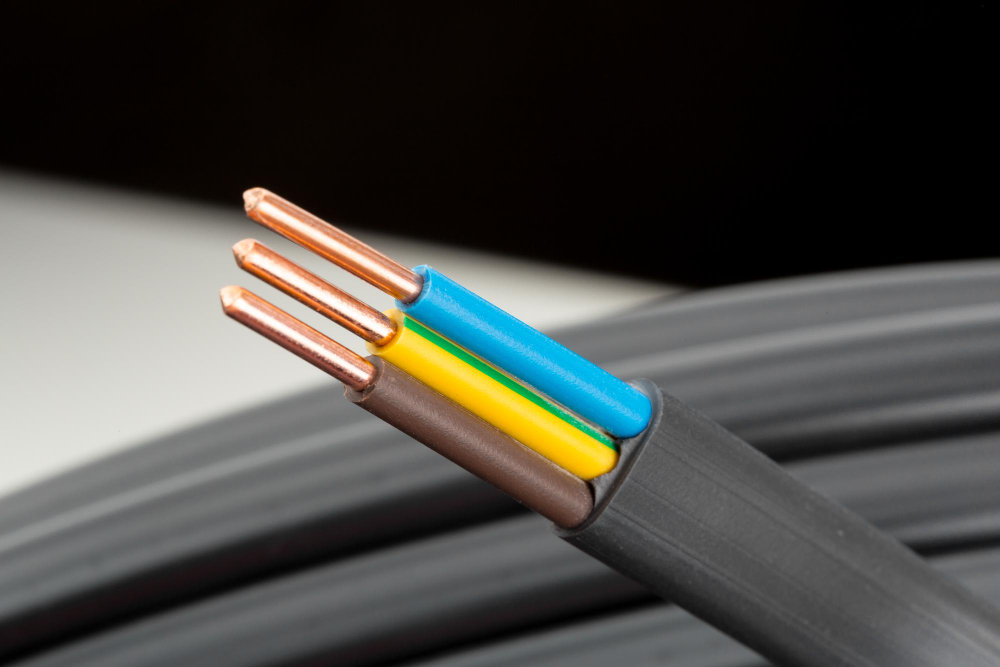
In today’s world of wireless networks and fiber optics, many people assume traditional cables are outdated. However, coaxial cable continues to play a crucial role in communication systems, broadcasting, security, and industrial applications.
Known for its durability, signal stability, and cost-effectiveness, coaxial cable remains a preferred choice across many industries. In this article, we’ll explain the advantages of coaxial cable, how it works, and why it is still relevant today.
What Is a Coaxial Cable?
A coaxial cable is a type of electrical cable designed to transmit high-frequency signals with minimal interference. It consists of four main layers:
- Inner conductor – carries the signal
- Insulating layer – separates the conductor
- Metallic shield – protects against interference
- Outer jacket – provides physical protection
This layered design is the key reason behind many of the advantages of coaxial cable.
Key Advantages of Coaxial Cable
1. Strong Protection Against Signal Interference
One of the biggest advantages of coaxial cable is its excellent shielding.
The metallic layer blocks electromagnetic interference (EMI) from nearby electrical equipment, ensuring:
- Clear signal transmission
- Reduced noise
- Stable performance in industrial or urban environments
This makes coaxial cable ideal for places with heavy electrical activity.
2. Reliable Signal Quality Over Long Distances
Compared to standard twisted-pair cables, coaxial cables can carry signals over longer distances without significant loss.
This advantage is especially important for:
- CCTV systems
- Radio communication
- Cable TV networks
- Broadband internet
Signal repeaters can further extend its effective range.
3. High Bandwidth Capability
Coaxial cables can handle high-frequency signals, allowing them to transmit:
- Video signals
- Audio signals
- Data signals
This is why coaxial cable is commonly used in:
- Digital audio systems
- Television broadcasting
- Surveillance cameras
4. Durable and Physically Strong
Another major advantage of coaxial cable is its robust construction. The outer jacket protects the cable from:
- Physical damage
- Moisture
- Heat
- Dust
This makes it suitable for outdoor installations, factories, and harsh environments.
5. Cost-Effective Communication Solution
Compared to fiber optic cables, coaxial cables are:
- More affordable
- Easier to install
- Less expensive to maintain
For many businesses, coaxial cable provides the best balance between performance and cost, especially for medium-range communication needs.
6. Easy Installation and Maintenance
Coaxial cable systems are relatively simple to deploy.
Advantages include:
- Standard connectors
- Wide availability of accessories
- Easy troubleshooting
This reduces downtime and maintenance costs.
7. Compatibility with Existing Systems
Many existing infrastructures are already designed around coaxial cable. This makes upgrades or expansions:
- Faster
- Less disruptive
- More economical
It is widely compatible with legacy and modern systems.
8. Secure Signal Transmission
The shielding design makes coaxial cables harder to tap compared to some other cable types.
This provides an additional level of signal security, especially important for:
- Surveillance systems
- Corporate communication
- Broadcast networks
Common Applications of Coaxial Cable
Because of its advantages, coaxial cable is widely used in:
- CCTV and surveillance systems
- Cable television (CATV)
- Broadband internet connections
- Digital audio systems
- Radio communication equipment
- Industrial monitoring systems
Coaxial Cable vs Other Cables
| Feature | Coaxial Cable | Twisted Pair | Fiber Optic |
| Interference Resistance | High | Medium | Very High |
| Cost | Moderate | Low | High |
| Installation | Easy | Easy | Complex |
| Distance Capability | Medium–Long | Short–Medium | Very Long |
This comparison highlights why coaxial cable remains a practical choice in many scenarios.
Why Choose Coaxial Cable from Sole Engineering
At Sole Engineering, we supply high-quality coaxial cables suitable for:
- Communication systems
- Audio and broadcast applications
- Security installations
Our solutions are selected for performance, durability, and compliance with industry standards, ensuring reliable operation in real-world conditions.
Frequently Asked Questions (FAQs)
1. What is the main advantage of coaxial cable?
The main advantage of coaxial cable is its ability to transmit signals with minimal interference due to strong shielding.
2. Is coaxial cable better than Ethernet cable?
It depends on the application. Coaxial cable is better for long-distance signal stability and interference resistance, while Ethernet is preferred for modern networking.
3. Can coaxial cable carry digital signals?
Yes, coaxial cable can carry both analog and digital signals, including video, audio, and data.
4. Is coaxial cable still used today?
Yes, it is widely used in CCTV, broadcasting, broadband, and communication systems.
5. Is coaxial cable suitable for outdoor use?
Yes, with proper insulation and jacket material, coaxial cable performs well in outdoor and harsh environments.
Conclusion
Despite advances in wireless and fiber technologies, the advantages of coaxial cable—such as signal stability, durability, cost-efficiency, and interference resistance—keep it highly relevant today.
For businesses and industries that need reliable, proven communication solutions, coaxial cable remains a smart and practical choice.