Atex handphone malaysia, a chemical processing plant, or a palm oil mill, a supervisor pulls out a regular smartphone to call the control room. The phone’s battery connector generates a tiny electrical arc. In a normal environment, this is invisible and harmless. In an atmosphere where flammable vapours are present, that arc can be the ignition source for an explosion.
This is not a theoretical risk. It is the precise reason ATEX-certified handphones exist — and why Malaysian industries governed by DOSH (Department of Occupational Safety and Health) hazardous area regulations require intrinsically safe communication devices in classified zones. Sole Engineering, with 38 years of experience in professional wireless communication, supplies ECOM ATEX handphones specifically engineered for Malaysian oil and gas, petrochemical, and industrial environments.
Understanding ATEX Certification: What It Means and Why It Matters
ATEX stands for ATmosphères EXplosibles — the European directive that defines equipment safety standards for use in explosive atmospheres. The ATEX directive is internationally recognised and widely adopted in Malaysia’s oil and gas sector, petrochemical industry, and any facility where flammable gases, vapours, mists, or combustible dust may be present.
ATEX-certified equipment is designed on the principle of intrinsic safety — the electrical and thermal energy within the device is limited to levels that cannot ignite an explosive atmosphere, even under fault conditions. For communication devices, this means specially designed batteries, sealed ports, spark-proof circuitry, and enclosures tested to prevent both internal and external ignition.
The complementary standard, IECEx, is the international certification accepted globally. ECOM handphones supplied by Sole Engineering carry both ATEX and relevant IECEx certifications, making them accepted across all major Malaysian regulatory frameworks and internationally.
ATEX Zone Classification: What Applies to Your Facility?
ATEX hazardous areas are classified by the frequency and duration of explosive atmosphere presence:
- Zone 1 — explosive gas atmosphere is likely to occur during normal operations (near equipment seals, pump housings, vessel vents). Requires ATEX Group II 2G certified equipment — the classification for Sole Engineering’s ECOM handphones.
- Zone 2 — explosive gas atmosphere is not likely to occur in normal operation, and if it does, only briefly (near flanges, pipe connections, storage areas). ATEX Group II 3G certified equipment sufficient.
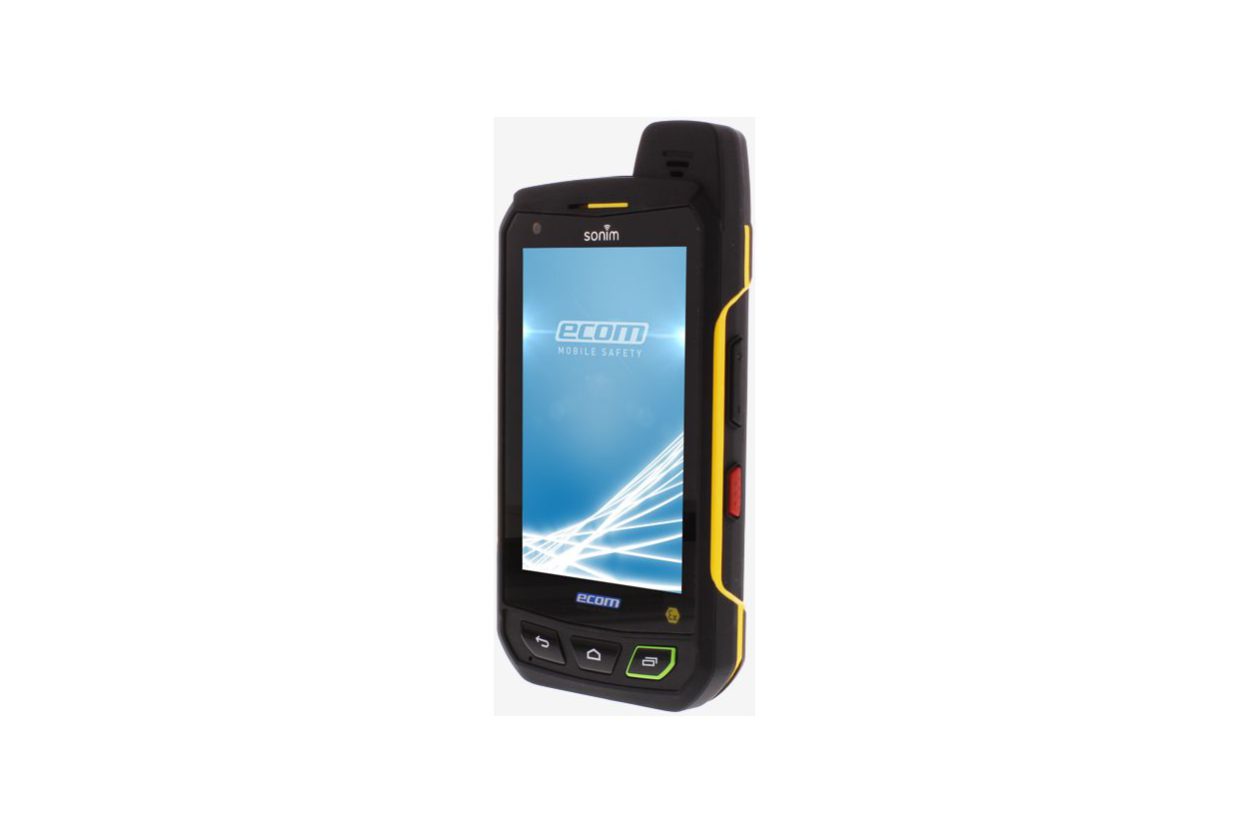
Both ECOM handphone models supplied by Sole Engineering — the HANDY10 ECOM and the ECOM Smart Ex-02 — are certified ATEX II 2G, covering Zone 1 and Zone 2 applications, with Zone 1 and Zone 2 options available on both devices.
Sole Engineering’s ECOM Handphone Range
HANDY10 ECOM
The HANDY10 is a rugged ATEX smartphone designed for demanding industrial environments. Authentic specifications from Sole Engineering’s product range:
- ATEX Certification: II 2G Ex ib op is IIC T4 Gb IP64 — Zone 1 and Zone 2 rated
- Operating System: Android 8.1 with Android Zero-Touch management and Google Play
- Protection: IP68 (immersion-rated) and MIL-STD-810G (military durability standard)
- Battery: 4,400 mAh with replaceable design
- Connectivity: 4G LTE FDD/TDD, 3G UMTS, 2G GSM, Wi-Fi dual-band (2.4GHz and 5GHz), Bluetooth 4.2, GPS/GLONASS/Beidou, NFC
- Camera: 8MP rear with autofocus and LED torch function
- SLA Agreement offered by Sole Engineering for enterprise deployments
ECOM Smart Ex-02
The Ex-02 is a larger-format ATEX device for users who need a bigger display in hazardous environments:
- ATEX Certification: II 2G Ex ib op is IIC T4 Gb IP64 — Zone 1 and Zone 2 rated
- Operating System: Android 9.0 with Android Enterprise Recommended certification
- Display: 12.7cm (5.0″) Gorilla Glass with glove touch and wet mode — operable with protective gloves
- Protection: IP68 and MIL-STD-810G
- Battery: Replaceable Li-Ion 4,400 mAh / 16.28Wh
- RAM/Storage: 3GB RAM + 32GB ROM, expandable to 128GB via microSD
- Connectivity: 4G LTE dual SIM, Wi-Fi dual-band, Bluetooth 4.2, GPS/GLONASS/Beidou/Galileo, NFC
Which Malaysian Industries Require ATEX Handphones?
Under DOSH Malaysia’s Occupational Safety and Health Act 1994 and the Petroleum (Safety Measures) Act 1984, employers operating hazardous classified areas are legally required to ensure all equipment — including communication devices — meets the appropriate intrinsic safety standards:
- Oil and gas upstream and downstream operations — drilling platforms, refineries, tank farms, pipeline operations
- Petrochemical and chemical manufacturing — solvent processing areas, chemical reactor zones, storage facilities for flammable liquids
- Palm oil processing mills — methane generation areas, biogas handling, and solvent extraction zones
- Pharmaceutical manufacturing — solvent handling areas where flammable vapours from ethanol, acetone, or isopropyl alcohol are present
- Paint and coatings manufacturing — flammable solvent vapour environments
Why Sole Engineering Is the Right Partner for ATEX Handphone Deployment
Supplying ATEX handphones is only part of the requirement. Industrial communication devices require proper frequency programming for PTT functionality, integration with existing communication systems (including TETRA networks for mission-critical environments), device management configuration, and SLA-backed maintenance.
Sole Engineering’s One-Stop Service approach covers all of this — supply, configuration, programming, user training, and ongoing maintenance with SLA agreements for enterprise clients. Their 38-year track record in Malaysian industrial and professional radio communication means they understand both the technical requirements and the Malaysian regulatory context, including DOSH and MCMC requirements.
Contact Sole Engineering to discuss ATEX handphone requirements for your facility. Their team will advise on the correct zone certification, device configuration, and support structure for your specific industrial environment.
Frequently Asked Questions: ATEX Handphone Malaysia
| Question | Answer |
| What is an ATEX handphone and why is it required in Malaysian oil and gas facilities? | An ATEX handphone is an intrinsically safe mobile device certified for use in explosive atmospheres. Malaysian oil and gas facilities require ATEX devices under DOSH regulations and the Petroleum (Safety Measures) Act 1984 to prevent ignition of flammable gases or vapours. |
| What is the difference between Zone 1 and Zone 2 ATEX certification? | Zone 1 covers areas where explosive gas is present during normal operations; Zone 2 covers areas where it occurs only in abnormal conditions. ECOM handphones from Sole Engineering are certified for both Zone 1 and Zone 2 environments. |
| Can a regular Android smartphone be used in a Malaysian petrochemical plant? | No. Regular smartphones are not intrinsically safe — their electrical components can generate sparks or heat sufficient to ignite flammable atmospheres. Using uncertified devices in ATEX-classified zones violates DOSH safety regulations. |
| What ATEX-certified handphones does Sole Engineering supply in Malaysia? | Sole Engineering supplies the ECOM HANDY10 (Android 8.1, IP68, MIL-STD-810G) and the ECOM Smart Ex-02 (Android 9.0, 5.0″ Gorilla Glass, IP68) — both ATEX II 2G certified for Zone 1 and Zone 2 hazardous environments. |
| Does Sole Engineering provide SLA maintenance for ATEX handphones in Malaysia? | Yes. Sole Engineering offers SLA agreements for ATEX handphone deployments, covering warranty and non-warranty repair, configuration, programming, and on-site service as part of their One-Stop Service approach. |