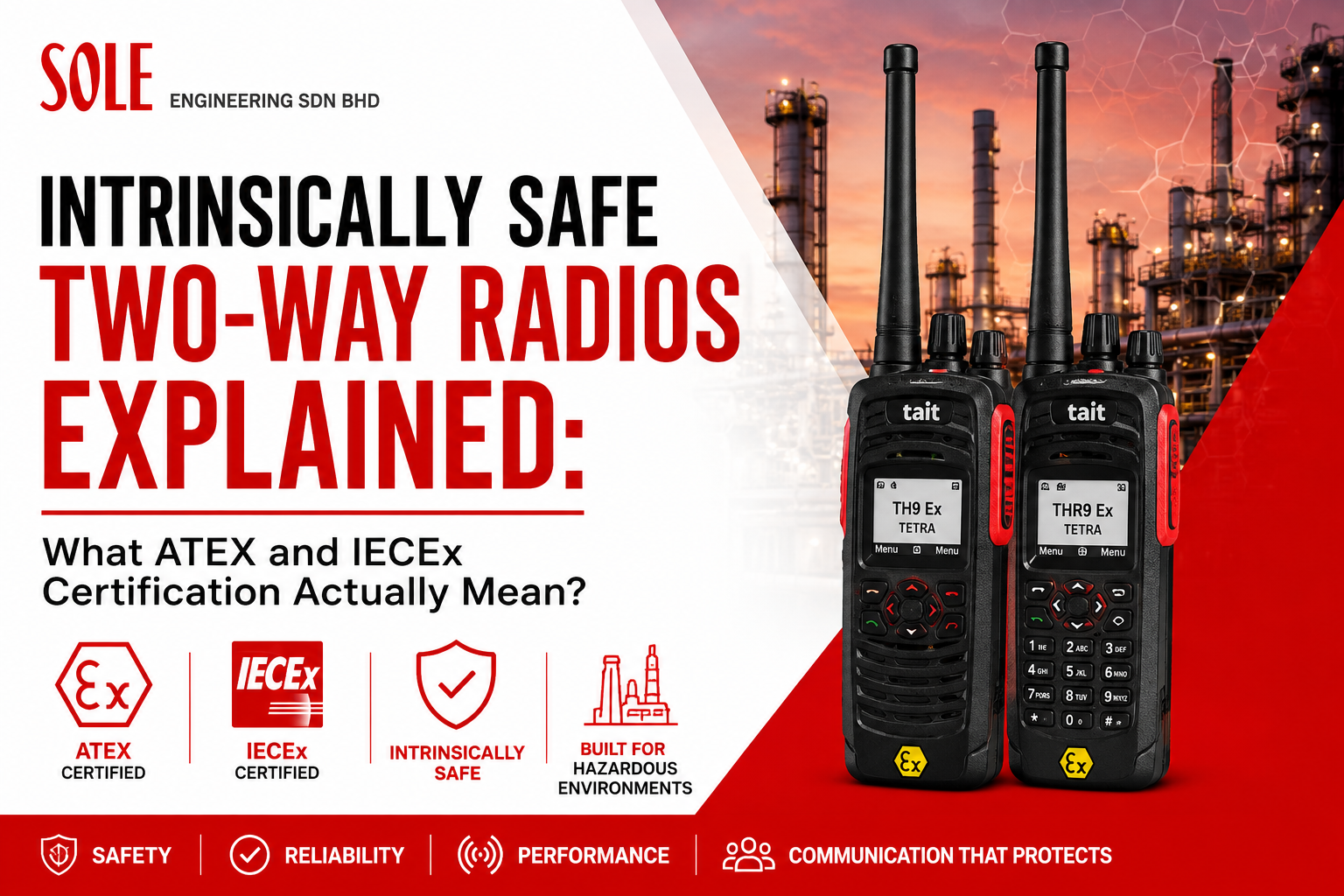
An intrinsically safe radio malaysia is a two-way radio specifically engineered to limit its electrical and thermal energy output so that it cannot generate enough of a spark or enough heat to ignite flammable gases, vapours, or combustible dust in the surrounding air — even if the device malfunctions. ATEX and IECEx are the two main certification systems that verify a radio meets this standard: ATEX is the certification required for use within the European Union, while IECEx is an internationally recognised certification system used more broadly, including across Asia. For businesses operating in oil & gas, petrochemical, mining, or any site with a classified explosive atmosphere, using a non-certified radio isn’t just a compliance risk — it’s a genuine safety hazard. intrinsically safe radio malaysia provide reliable communication in hazardous environments where explosive gases, vapours, or dust may be present.
Why Ordinary Radios Are Dangerous in Hazardous Areas
- Standard electronic components can produce tiny sparks during normal switching, or generate heat through their circuitry, both of which are hidden ignition risks in an environment with explosive gas, vapour, or dust present.
- Explain the difference between explosion-proof (containing an explosion within a sealed housing) and intrinsically safe radio malaysia (preventing enough energy from ever being released to cause ignition in the first place) — the two approaches are often confused but are technically different protection methods.
ATEX vs IECEx — What’s the Difference?
| Factor | ATEX | IECEx |
| Jurisdiction | Legal requirement within the European Union | International certification system, widely accepted including in Asia-Pacific |
| Basis | EU directive (equipment for use in explosive atmospheres) | IEC international standard-based scheme |
| Recognition | Mandatory in EU markets | Voluntary but broadly recognised; often carried alongside ATEX on the same device |
| Relevance for Malaysia | Relevant mainly for equipment also destined for or sourced from EU markets | More directly relevant as the internationally recognised mark for Malaysian and regional hazardous-site procurement |
Which Industries in Malaysia Actually Need Certified Radios
- Oil & gas platforms, terminals, and refineries
- Petrochemical and chemical processing plants
- Steel mills and heavy industrial manufacturing with combustible dust
- Grain handling, paint spraying, and other processes generating explosive dust atmospheres
- Ports, harbours, and fuel storage/handling facilities
What to Check Before Buying a “Hazardous Area” Radio
- Confirm which certification (ATEX, IECEx, or both) the specific model carries — not just the brand’s general product line
- Check the zone/category rating matches the actual hazard classification of the site (not all intrinsically safe radio malaysia cover every zone type)
- Confirm the certification covers gas, dust, or both — some devices are certified for one but not the other
- Verify the certification is current and applies to the exact model/variant being purchased, not a similarly-named non-certified version
- Factor in accessories — a certified radio paired with a non-certified battery, headset, or charger can compromise the overall intrinsic safety of the setup
How Sole Engineering Supports This
Sole Engineering supports organisations operating in hazardous environments with proven TETRA communication solutions such as the TH9 EX and THR9 EX, which feature ATEX and IECEx certification for gas and dust environments and are suited to demanding industries including oil & gas, petrochemical and steel operations. Rather than expecting buyers to interpret complex certification and zone requirements alone, Sole Engineering’s experienced technical team and Service Centre can provide guidance on selecting the appropriate radio, certification and protection level for a specific operational environment, alongside configuration, programming, servicing and repair support. For further advice, customers can explore Sole Engineering’s TETRA radio solutions, radio repair and service support, or contact the technical team.
Frequently Asked Questions
1: What does “intrinsically safe radio malaysia means?
A: It means the radio is designed to limit its electrical and thermal energy so it cannot produce enough spark or heat to ignite a flammable gas, vapour, or combustible dust atmosphere, even under fault conditions.
2: What’s the difference between ATEX and IECEx certification?
A: ATEX is a legally mandated certification for equipment used in explosive atmospheres within the European Union, while IECEx is an internationally recognised certification system used more broadly across regions including Asia-Pacific; many devices carry both.
3: Which industries in Malaysia need intrinsically safe radios?
A: Oil & gas, petrochemical, steel and heavy manufacturing, grain handling, and any site with a classified explosive gas or dust atmosphere typically require intrinsically safe radio malaysia communication equipment.
4: Can I use a normal walkie talkie in a hazardous area if I’m careful?
A: No — the risk isn’t about careful handling, it’s about the device’s internal electrical characteristics; only equipment certified as intrinsically safe radio malaysia (ATEX/IECEx or equivalent) for the specific hazard zone should be used.
5: Do radio accessories also need to be certified for hazardous areas?
A:Yes.intrinsically safe radio malaysia pairing a certified radio with a non-certified battery, headset, or charger can compromise the intrinsic safety of the overall setup, so accessories should be verified as compatible and certified as well.