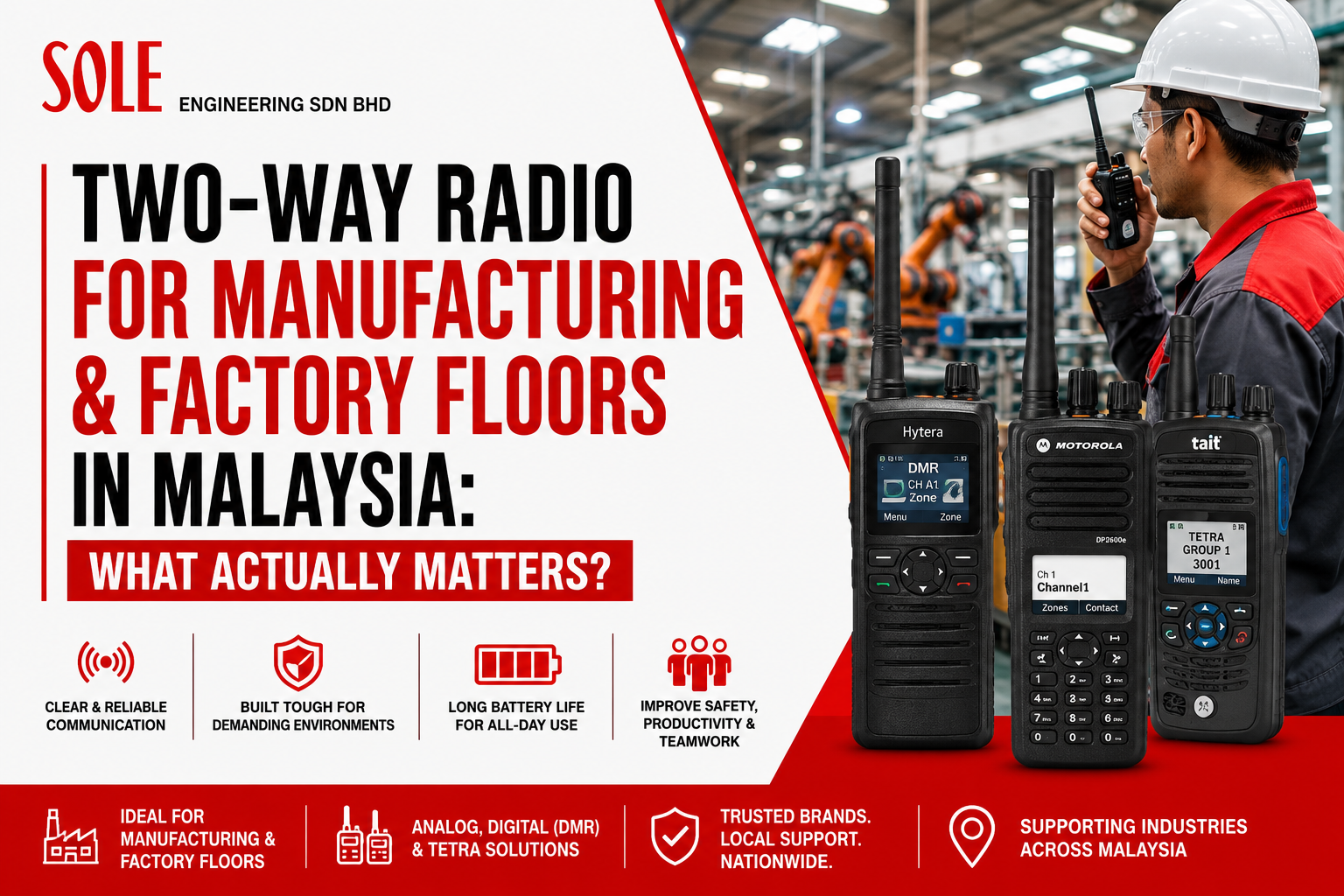
A two way radio for manufacturing malaysia plant needs to solve three problems that office-grade or consumer radios usually can’t: cutting through constant machine noise, holding up physically to dust, vibration, and rough handling, and keeping every shift supervisor, line worker, and maintenance team connected across a large, often multi-storey facility. Choosing the right two way radio for manufacturing malaysia operations is therefore about more than basic communication. On a factory floor, a missed instruction can become a safety incident rather than simply an inconvenience.
Why Ordinary Radios Struggle on a Factory Floor
Manufacturing environments place much greater demands on communication equipment than typical offices. A professional two way radio for manufacturing malaysia facilities should be designed to perform reliably in demanding industrial conditions.
Common challenges include:
- Constant broadband noise from stamping presses, conveyors, CNC machines, and pneumatic tools can mask normal speech.
- Metallic dust, oil mist, and vibration can shorten the working life of radios not designed for industrial use.
- Large facilities with concrete and metal structures can create dead zones that a basic radio cannot reliably cover.
- Multiple shifts and departments require clear communication between supervisors, production teams, maintenance staff, security, and safety personnel.
For these reasons, selecting a suitable two way radio for manufacturing malaysia solution should begin with the actual factory environment rather than simply choosing the cheapest available radio.
Features That Actually Matter for Manufacturing Environments
When selecting a two way radio for manufacturing malaysia factory, focus on the features that directly affect communication reliability, durability, and safety.
1. Noise-Cancelling Audio Processing
Factory machinery can generate significant background noise. Noise reduction, automatic gain control, and advanced audio processing help keep voices intelligible when workers are communicating around heavy equipment.
For a two way radio for manufacturing malaysia plant, clear audio is particularly important when supervisors are giving production instructions or maintenance teams are coordinating equipment repairs.
2. Rugged, IP-Rated Housing
Factory radios can be exposed to dust, oil, vibration, accidental drops, and moisture. A rugged, IP-rated two way radio for manufacturing malaysia solution can provide greater protection against the physical conditions found on industrial floors.
In wet-process or wash-down areas, the appropriate level of water and dust protection should be considered before selecting equipment.
3. Sufficient Coverage for the Facility
A factory may include production halls, warehouses, loading areas, offices, workshops, and multiple floors. A two way radio for manufacturing malaysia system must therefore provide sufficient coverage across the entire operational footprint.
For larger facilities, a digital DMR system with repeater support may be more suitable than basic short-range radios. Coverage testing and site surveys can help identify dead zones before deployment.
4. Group and Zone Channels
Manufacturing companies often have several teams communicating at the same time. A professional two way radio for manufacturing malaysia system can be configured with group and zone channels for production, supervisors, maintenance, security, and emergency communication.
This allows workers to communicate with the right teams without unnecessary radio traffic.
5. Long Battery Life
Manufacturing plants may operate multiple shifts, making battery endurance an important consideration. A reliable two way radio for manufacturing malaysia should provide sufficient battery life for the intended shift pattern.
Fast charging, spare batteries, and appropriate charging infrastructure can also help keep radios operational throughout extended production schedules.
6. Hazardous-Area Certification Where Relevant
Some manufacturing facilities handle combustible dust, flammable materials, gases, or other hazardous substances. In these areas, an intrinsically safe two way radio for manufacturing malaysia solution may be required.
ATEX/IECEx-certified radios should be considered where the specific hazardous zone and site requirements call for certified equipment. Certification should always match the actual environment in which the radio will be used.
Analog vs Digital for a Manufacturing Plant
Choosing between analog and digital communication depends on the size, layout, noise level, and operational requirements of the facility.
Analog Two-Way Radios
Analog radios can remain a practical and lower-cost option for smaller manufacturing operations with modest coverage requirements. They are generally simple to operate and can be suitable when advanced communication features are not required.
However, businesses looking for a more capable two way radio for manufacturing malaysia solution may benefit from moving to digital technology as their communication requirements grow.
Digital DMR Radios
Digital Mobile Radio (DMR) systems can provide clearer audio, improved spectrum efficiency, and features such as individual calling and group calling. These capabilities can be particularly useful in large factories with multiple departments and teams.
For many larger manufacturing operations, a digital two way radio for manufacturing malaysia system can provide better communication management than basic analog equipment.
Businesses can also explore Sole Engineering’s DMR radio solutions for a deeper look at professional digital communication options.
A Simple Way to Plan a Factory Radio Rollout
Before purchasing a two way radio for manufacturing malaysia system, businesses should assess how their teams actually communicate across the facility.
1. Map the Facility
Identify production areas, warehouses, loading zones, maintenance workshops, offices, outdoor areas, and potential communication dead zones.
2. Count Users and Teams
Determine how many workers need radios and identify the departments that require separate communication groups, such as production, supervisors, maintenance, security, and safety.
3. Decide Between Analog and Digital
Consider facility size, machinery noise, required coverage, number of users, and communication features when selecting the right two way radio for manufacturing malaysia solution.
4. Check Hazardous Areas
Determine whether any part of the facility contains combustible dust, flammable gases, vapours, or other hazardous conditions requiring ATEX/IECEx-certified intrinsically safe equipment.
5. Select the Right Accessories
Accessories can have a major impact on usability. Depending on the environment, consider noise-cancelling headsets, remote speaker microphones, spare batteries, charging systems, and rugged carrying solutions for your two way radio for manufacturing malaysia deployment.
Why Choosing the Right Two Way Radio Matters
The right two way radio for manufacturing malaysia system can support faster coordination between production teams, supervisors, maintenance personnel, security, and emergency responders.
Instead of relying on personal phones or consumer communication devices that may not be designed for industrial environments, manufacturers can use professional radio systems built around their facility’s coverage, operational requirements, and working conditions.
A properly planned two way radio for manufacturing malaysia solution should therefore combine reliable coverage, clear audio, rugged construction, suitable battery performance, practical channel management, and appropriate safety certifications where required.
Conclusion
For businesses looking for a reliable two way radio for manufacturing malaysia solution, Sole Engineering provides professional communication systems for different industrial and commercial environments. Explore the company’s DMR radio solutions for professional digital communication or learn more about TETRA and ATEX-certified systems through the site’s hazardous-area content.
For a broader overview of professional communication solutions, visit the Walkie-Talkie Supplier in Malaysia page and the Two-Way Radios pillar page. These resources can help businesses understand the different communication options available for manufacturing facilities across Malaysia.
For more information about two way radio for manufacturing malaysia solutions, professional communication systems, and suitable equipment for your facility, feel free to contact Sole Engineering and speak with the team.
Frequently Asked Questions
What kind of two way radio is best for a factory floor?
A rugged, IP-rated digital DMR radio with noise-cancelling audio processing is generally a strong choice for factory environments. The best two way radio for manufacturing malaysia solution depends on the factory’s noise levels, coverage requirements, number of users, and operating conditions.
Do manufacturing plants need digital or analog radios?
Smaller facilities with modest coverage requirements can often use analog radios cost-effectively. Larger or noisier plants may benefit from digital DMR radios because of clearer audio, efficient channel management, and group communication features.
Why do factory radios need noise-cancelling features?
Machinery such as stamping presses, conveyors, CNC equipment, and pneumatic tools can make normal speech difficult to hear. Noise-cancelling technology helps a two way radio for manufacturing malaysia system maintain clearer communication in these demanding environments.
Does a manufacturing plant need intrinsically safe radios?
Only specific areas may require intrinsically safe radios. If a facility contains zones with combustible dust, flammable gases, vapours, or other hazardous materials, ATEX/IECEx-certified equipment may be required for those areas.
How do I choose a two way radio for manufacturing Malaysia?
Start by assessing factory size, coverage requirements, machinery noise, number of users, operating shifts, hazardous areas, and required communication groups. A professional radio supplier can then recommend the appropriate two way radio for manufacturing malaysia system and accessories for the facility.